Sinusitis Diagnosis and the Role of CBCT and MCT is the topic examined in this content. These methods assist physicians in addressing patients’ sinus problems with greater accuracy. Frequently asked questions answered in this content include: What is CBCT and how does it help in diagnosing sinusitis? What features does MCT have? Which method is more suitable? Are these methods appropriate for all patients? Do these methods have any side effects? Given this explanation, we hope that by reading this content, you will gain precise information about the diagnosis of sinusitis and how these two methods work.
An Introduction to the Importance of Sinusitis Diagnosis
Sinusitis is a common problem among individuals, referring to the inflammation or infection of the sinuses. The sinuses are small air cavities located in various areas of the skull, including behind the cheeks, the forehead, and around the nose. The primary function of the sinuses is to produce mucus, which helps keep the nasal passages moist and prevents the entry of contaminated particles and microorganisms. Sinusitis occurs when the sinus passages become blocked due to inflammation or infection, and mucus is not properly drained. This blockage can lead to symptoms such as pain and pressure in the facial area, headaches, nasal discharge, reduced sense of smell, and fever.
The Importance of Sinusitis Diagnosis
Accurate and timely diagnosis of sinusitis is important for several reasons:
Effective Treatment: Correctly diagnosing the type of sinusitis (acute, chronic, or allergic) helps the physician choose the best treatment method. Incorrect diagnosis can lead to inappropriate treatments, which may worsen the patient’s condition and even cause long-term issues.
Prevention of Complications: Untreated or improperly treated sinusitis can lead to more serious complications, including infections spreading to surrounding areas such as the eyes, brain, and bones. These complications can result in more severe problems like meningitis or brain abscess, which require immediate medical intervention.
Reduction of Pain and Discomfort for the Patient: Sinusitis, especially in acute and chronic cases, can cause severe pain and daily discomfort. Accurate diagnosis and timely treatment can help the patient quickly relieve symptoms and return to normal life.
Prevention of Overuse of Antibiotics: In cases where viral or allergic infections are the cause of sinusitis, using antibiotics may be ineffective or even harmful. Correct diagnosis assists physicians in avoiding incorrect prescriptions and reducing antibiotic resistance.
Preventive Treatments: With accurate diagnosis, physicians can provide patients with recommendations to prevent the recurrence of sinusitis. This may include lifestyle changes, specific medications, or even surgical procedures to open the sinus passages.
The Role of Imaging Methods in Sinusitis Diagnosis
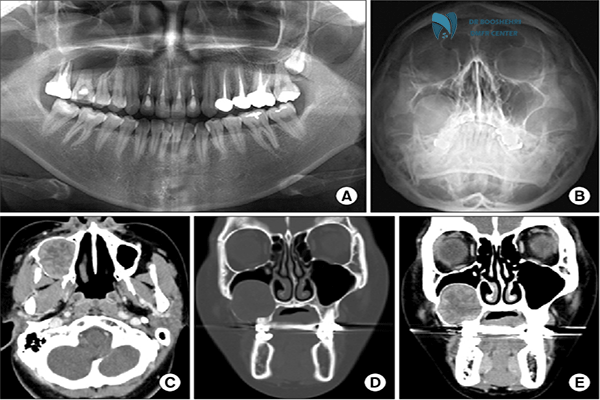
Accurate diagnosis of sinusitis often requires examining images of the sinuses. Imaging methods such as CBCT (Cone Beam Computed Tomography) and MCT (Multislice Computed Tomography) allow physicians to obtain three-dimensional and highly detailed images of the sinuses and air passages. These images assist the physician in identifying blockages, inflammations, and any infections that may not be physically visible. Precise and rapid diagnosis using these imaging techniques not only aids in timely treatment but can also prevent the need for more complex medical interventions and shorten the patient’s recovery time.
A recent study conducted in 2023 examined the diagnostic accuracy of these radiological methods and highlighted their superiority over traditional techniques such as radiography.
In the continuation of this article, we will examine how each of these techniques works, their advantages and disadvantages, and the key differences between CBCT and MCT.
What are CBCT and MCT?
To achieve more accurate diagnoses of sinusitis and related sinus issues, physicians use advanced imaging methods such as CBCT (Cone Beam Computed Tomography) and MCT (Multislice Computed Tomography). These two imaging technologies are particularly important for examining the complex structures of the face and skull. Below, we will detail how each of these two techniques operates and their key differences.
CBCT (Cone Beam Computed Tomography)
CBCT, or Cone Beam Computed Tomography, is a three-dimensional imaging technology primarily used in dentistry and maxillofacial radiology. This method utilizes a cone-shaped beam for imaging, requiring only a single complete rotation of the device around the patient’s head to produce accurate three-dimensional images of the bone structures and soft tissues.
Features and Advantages of CBCT:
- Accurate 3D Images: This device allows physicians to access high-resolution images of the sinuses, bones, and teeth.
- Lower Radiation Dose: Compared to conventional CT methods, CBCT delivers less radiation to the patient’s body, which is especially important for patients requiring multiple imaging sessions.
- Application in Dentistry: Due to its high accuracy and ability to create detailed images of teeth and jaws, CBCT is widely used in dentistry for diagnosing sinusitis caused by dental issues. This technique is particularly useful for identifying sinusitis resulting from tooth infections that have spread to the maxillary sinuses.
- Shorter Imaging Time: Unlike MCT, which requires multiple rotations, CBCT images all target areas with a quick and short rotation.
MCT (Multislice Computed Tomography)
MCT, or Multislice Computed Tomography, is another type of three-dimensional imaging technology that uses multiple image slices during the imaging process. Unlike CBCT, which employs a cone beam, MCT utilizes a narrower, rotating beam to produce multiple layered images.
Features and Advantages of MCT:
- Multilayered Images with More Detail: MCT, due to its ability to generate multiple image slices with each rotation, provides more detailed images of various body regions, especially in larger areas such as the chest, abdomen, and head. This feature allows physicians to examine different areas of the sinuses with greater accuracy.
- Wider Area Coverage: Unlike CBCT, which is primarily used for smaller areas like the jaw and face, MCT can cover broader regions of the body, making it suitable for diagnosing sinus issues that may be related to other parts of the body.
- Application in General Medicine: MCT is more commonly used in hospitals and large medical centers and is applicable for examining a wider range of medical problems. In the case of sinusitis, this method is beneficial for assessing more advanced inflammations or chronic sinusitis that may require further investigation of the areas surrounding the sinuses.
Key Differences Between CBCT and MCT
- Type of Beam and Device Rotation: CBCT utilizes a cone beam for imaging, while MCT employs a narrower beam and multiple image slices.
- Radiation Exposure: CBCT delivers less radiation compared to MCT, making it more suitable for dentistry and more localized diagnoses.
- Image Precision and Detail: CBCT produces high-resolution three-dimensional images, making it effective in diagnosing dental and jaw issues related to the sinuses, while MCT provides more detailed images of larger body structures.
- Applications: CBCT is primarily used in dentistry and maxillofacial radiology, whereas MCT is applied in diagnosing a broader spectrum of medical problems.
How CBCT and MCT Assist in Diagnosing Sinusitis
The diagnosis of sinusitis using advanced imaging techniques such as CBCT and MCT is highly effective due to these technologies’ ability to generate detailed and precise three-dimensional images. Both techniques help physicians obtain more information about the condition of the sinuses, blockages, infections, and inflammations, enabling them to provide a more accurate diagnosis. The following sections will elaborate on how each of these technologies aids in diagnosing sinusitis.
Assistance of CBCT in Diagnosing Sinusitis
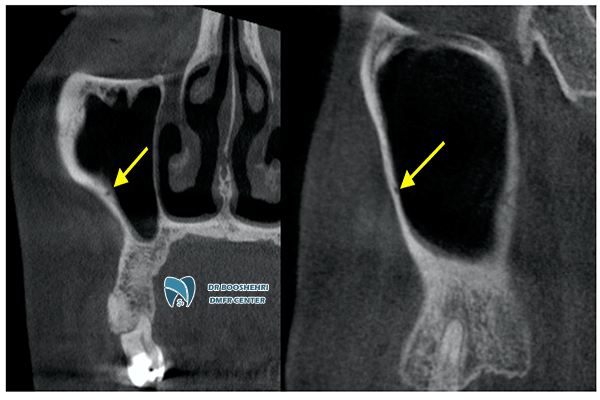
As previously explained, CBCT creates high-resolution three-dimensional images using cone beams and rapid rotation, effectively covering small areas such as the sinuses around the teeth and jaw. It allows physicians to accurately identify small obstructions in the sinus passages, localized inflammations, and even dental infections that have spread to the sinuses.
CBCT is particularly effective in cases where sinusitis is caused by dental issues. For instance:
- If a dental infection has spread to the maxillary sinuses, CBCT can clearly depict this connection, helping the physician identify the root cause of the problem.
- This technology is also useful in assessing structural abnormalities that may obstruct the sinus passages. In such cases, physicians can easily detect obstructions caused by abnormal bone shapes or tissue swelling.
Assistance of MCT in Diagnosing Sinusitis
MCT, due to its ability to provide multilayered images and cover a broader area of the head and sinuses, is very useful in diagnosing more complex sinusitis cases or chronic sinusitis. This technology can assist physicians in making more precise diagnoses in the following scenarios:
- Assessment of Widespread Inflammation: In cases where inflammation has spread to multiple sinuses, MCT allows physicians to gain a comprehensive view of the sinus conditions and the extent of the inflammation. This is particularly useful in diagnosing chronic sinusitis that may involve several sinuses.
- More Accurate Infection Diagnosis: MCT can help physicians evaluate the depth and severity of sinus infections and identify any sinus obstructions that may require surgical intervention.
- Assessment of Sinus Passages Post-Treatment: This technology can also be utilized after treatment courses to ensure that the sinus passages are adequately open and that no obstructions or remaining inflammations persist.
Application in Treatment Method Selection
The use of CBCT and MCT in diagnosing sinusitis enables physicians to make better decisions regarding treatment options. For example:
- If CBCT reveals an obstruction caused by dental issues, the physician may recommend dental treatments such as tooth extraction or root canal therapy.
- If MCT indicates that an infection has spread to the surrounding sinuses or that there are more serious obstructions, the physician may consider surgical methods such as endoscopic sinus surgery.
These capabilities ensure that diagnoses based on CBCT and MCT are not only more accurate but also assist physicians in devising more targeted treatment plans for patients. These methods can prevent incorrect medication prescriptions, unnecessary surgical procedures, or misdiagnosis, thereby facilitating faster recovery for patients.
Overall, both CBCT and MCT are powerful tools for diagnosing sinusitis that help physicians identify sinus problems more accurately and quickly.
Advantages and Disadvantages of Using CBCT and MCT in Diagnosing Sinusitis
Both CBCT and MCT possess specific advantages and disadvantages when utilized for diagnosing sinusitis, which can influence decisions based on the patient’s condition and diagnostic needs. These advanced imaging techniques play a crucial role in assessing sinus problems and determining treatment plans, given the precision and detail they provide. However, there are key differences in how each operates, leading to their respective advantages and limitations.
Advantages of Using CBCT in Diagnosing Sinusitis
CBCT, as a cone beam-based technology, has the capability to produce high-resolution three-dimensional images with precise details. This feature allows physicians to accurately identify issues in delicate and small structures, such as the sinuses around the teeth and jaw. Therefore, one of the most significant advantages of CBCT is its high-quality images in the simultaneous assessment of dental and sinus problems.
Another advantage of CBCT is its imaging speed. The short time required to obtain images not only provides greater comfort for the patient but also allows this method to be performed in dental offices. Additionally, the lower radiation dose compared to MCT is another advantage, as the reduced exposure can effectively minimize the potential risks associated with ionizing radiation for the patient.
Furthermore, CBCT is typically presented as a more cost-effective option due to its ease of use and lower costs compared to other three-dimensional imaging methods like MCT. This factor makes it a popular choice for many patients, especially for examining dental issues related to sinusitis.
Disadvantages of Using CBCT in Diagnosing Sinusitis
Although CBCT has significant advantages, it also has limitations in certain cases that must be taken into account. One of the main drawbacks is the limited field of view. CBCT typically covers smaller areas of the head and face and may not be sufficiently effective for evaluating extensive sinusitis or complex sinus problems that have spread to other regions.
Additionally, despite the high accuracy of the images, CBCT may have limitations in identifying soft tissues. In situations where a detailed examination of widespread infections or inflammations is required, it may not provide sufficient detail, and in such cases, the use of MCT is recommended.
Advantages of Using MCT in Diagnosing Sinusitis
In contrast, MCT is recognized as a powerful tool for diagnosing chronic or complex sinusitis due to its use of multiple layered images and broader coverage of the sinus area and head. MCT, with high resolution and the ability to display multiple slices of the sinus region, helps physicians obtain a comprehensive view of the condition of the sinuses and surrounding areas.
This method can be very effective in diagnosing structural problems, such as sinus obstructions and severe infections that require surgery. MCT also has a greater capability to detect deep sinus inflammations and infections, allowing physicians to determine appropriate treatment methods with higher accuracy.
Another advantage of MCT is that it can be used to assess post-treatment stages as well. For instance, after sinus surgery or medical treatment, MCT can indicate whether the sinus passages have fully opened or if there is still obstruction or inflammation remaining.
Disadvantages of Using MCT in Diagnosing Sinusitis
However, the use of MCT is not without its issues. One of the main disadvantages of this method is the high dose of radiation, which can pose greater health risks in cases where the patient requires frequent imaging. Therefore, for patients who are sensitive to radiation or those needing multiple follow-ups, the use of this method should be approached with caution.
Additionally, the higher cost and limited access to MCT compared to CBCT are other drawbacks. Many medical centers may not have this technology, meaning that patients may need to visit specialized centers, which can be costly and time-consuming for some patients.
Ultimately, when choosing between CBCT and MCT, the physician must assess the patient’s condition and diagnostic needs. For dental issues or localized sinusitis, CBCT is a suitable and cost-effective option, while for chronic sinusitis, widespread infections, or complex cases, MCT would be a better choice.
Which Method is Better for Diagnosing Sinusitis: CBCT or MCT?
To answer the question of which method is better for diagnosing sinusitis—CBCT or MCT—several important factors must be considered, each influencing the final choice. Earlier, detailed explanations of the features of CBCT and MCT were provided, and the advantages and disadvantages of each were discussed. However, the choice of the best method will vary based on the specific circumstances of the patient and the type of sinusitis.
Both CBCT and MCT are modern and advanced technologies used for diagnosing sinus problems. If we compare them, CBCT is more suitable for cases involving milder sinusitis and localized sinus issues alongside dental problems. For example, in cases where a patient requires a detailed examination of tooth roots, adjacent sinus passages, or minor abnormalities in the sinuses, CBCT is the better choice. This is due to its high accuracy in structural details and lower radiation dose, which helps reduce the risks associated with ionizing radiation for the patient. Furthermore, the lower cost and greater availability of CBCT in dental offices make it an ideal option for patients with combined sinus and dental issues.
On the other hand, MCT, due to its ability to provide multi-layered images and broader coverage, is more suitable for diagnosing chronic sinusitis and more complex sinus inflammations. If a physician wants to accurately assess the condition of all sinus passages and even deep, widespread infections, MCT is more effective. This method is particularly applicable in patients with chronic and recurrent sinusitis or cases where sinus surgery is being considered, thanks to its high accuracy in identifying soft tissues and its capability to display various sinus structures at multiple angles. However, it is important to note that the higher radiation dose and increased costs are limitations of this method.
Ultimately, the answer to which method is better depends on the diagnostic objectives of the physician and the clinical status of the patient. For localized issues, a combination of sinus and dental problems, or situations where a lower radiation dose is required, CBCT would be a suitable choice. Conversely, if a patient suffers from chronic sinusitis or severe infections and needs a deeper examination of sinus structures, MCT would be a better option.
The physician will ultimately recommend the most appropriate method based on the clinical diagnosis and type of sinusitis. For many patients, a combination of these two methods may be used depending on diagnostic needs to achieve the best results.
Are CBCT and MCT Suitable for All Patients?
In response to the question of whether CBCT and MCT are suitable for all patients, several factors must be considered that significantly influence the decision to use these imaging methods. While both methods have their specific advantages and disadvantages, the individual circumstances of the patient, the type of sinusitis, and even the diagnostic goals of the physician can all affect the choice of one method over the other.
Considering the physical and medical characteristics of the patient, including age, gender, health status, and sensitivity to radiation, is vital. For instance, in elderly patients or those suffering from specific diseases, such as respiratory issues, the physician may prefer to use methods that involve lower radiation doses. In such cases, CBCT may be a better option since its radiation dose is typically less than that of MCT. Additionally, for patients who undergo frequent treatments due to age or chronic illnesses, reducing radiation exposure becomes even more important.
Moreover, the condition of the sinuses and the type of infection also play a crucial role in choosing the imaging method. For example, CBCT may be more effective for patients with combined sinus and dental issues due to its high accuracy and clarity in diagnosing dental and adjacent sinus problems. On the other hand, when there is a more widespread infection or inflammation in the sinuses, MCT can help physicians obtain more comprehensive images of the sinus conditions and existing issues.
Another topic in selecting between these two methods is access to equipment and costs. Some clinics or medical centers may only be equipped with one of these methods. In such cases, patients may be required to accept the available method, even if it is not the best option for them. Furthermore, the costs associated with MCT are generally higher than those of CBCT, which may be an important factor for some patients when making their choice.
Consequently, while both CBCT and MCT are effective tools for diagnosing sinusitis and related issues, selecting the best method depends on the individual patient’s condition, the nature of the problem, and their medical circumstances. Physicians, based on their experience and knowledge, can advise patients on which method is more suitable for their specific conditions. Ultimately, discussing with the physician and assessing the individual needs of the patient is the best way to select the most appropriate imaging method.
Frequently Asked Questions About CBCT and MCT in Sinusitis Diagnosis
What is CBCT and how does it help in diagnosing sinusitis?
CBCT, or Cone Beam Computed Tomography, is a three-dimensional imaging technique that accurately examines dental and sinus structures. This method aids in diagnosing sinusitis by providing deeper insights into the status of the sinuses.
What features does MCT have and how can it facilitate the diagnosis of sinusitis?
MCT, or Multi-Slice Computed Tomography, helps diagnose sinusitis by providing highly detailed images of the sinuses and soft tissues, enabling the detection of deeper infections and more complex issues.
Which method is more suitable for diagnosing sinusitis: CBCT or MCT?
The choice of the best method depends on the individual patient’s condition and the type of sinusitis. CBCT is more appropriate for localized issues, while MCT is more effective for broader infections.
Is the use of CBCT and MCT suitable for all patients?
No, the choice of these methods depends on factors such as the patient’s age, health status, and type of infection.
Do these methods have side effects?
Both methods involve radiation exposure that should be considered; however, CBCT typically uses a lower dose of radiation.
Content Summary and Consultation Recommendation
At the conclusion of this content, a comprehensive and detailed review of CBCT and MCT in the diagnosis of sinusitis has been provided. Considering the advantages and disadvantages of each method, you now have the necessary information to choose the best option. Additionally, Dr. Boshiri, with expertise in imaging and treatment of jaw and facial issues, can assist you in better understanding these methods and offering specialized consultations. For more information and professional advice, be sure to contact Dr. Boshiri.