Dental Radiography During Pregnancy is a topic that we have thoroughly explored in this article. If you are pregnant and concerned about the effects of radiation on your baby, here you will find essential information about the safety of radiography, the best time to undergo it, and strategies for minimizing potential risks. Additionally, answers to frequently asked questions that are vital for your understanding are provided in this article.
Questions addressed in this article include:
- Is dental radiography safe during pregnancy?
- How can radiation risks from dental radiography be reduced during pregnancy?
- Everything you need to know about dental radiography during pregnancy: Essential tips.
- Is dental radiography harmful to the fetus?
- When can dental radiography be performed during pregnancy?
- Protective measures for mother and baby during dental radiography in pregnancy.
- When is dental radiography necessary during pregnancy?
- The impact of dental radiography in different trimesters of pregnancy: When is it safest?
- Benefits and risks of dental radiography during pregnancy.
- Can alternative methods be used instead of dental radiography during pregnancy?
To find answers to these important and essential questions, make sure to read the entire article!
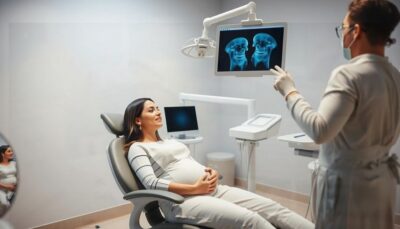
Dental Radiography During Pregnancy
Is Dental Radiography Safe During Pregnancy?
Dental radiography during pregnancy is one of the primary concerns for expectant mothers, as many worry about the potential effects of radiation on the fetus. However, research has shown that dental radiography during pregnancy is safe when conducted with appropriate equipment and protective techniques. The amount of radiation used in dental X-rays is minimal and is unlikely to harm the fetus.
Dentists typically use protective lead aprons to shield the mother’s and baby’s bodies from direct radiation. These aprons are made from special materials that significantly reduce radiation exposure. Additionally, newer radiography equipment produces lower radiation doses, further ensuring the safety of both mother and fetus.
Ultimately, while dental radiography during pregnancy is safe, the decision to proceed should be made in consultation with both the dentist and the obstetrician. In cases where radiography is not urgently needed, it might be better to wait until after pregnancy.

Dental Radiography During Pregnancy Should Be Conducted Under Specialist Supervision
How Can Radiation Risks from Dental Radiography Be Reduced During Pregnancy?
One of the common concerns for expectant mothers is how to reduce potential radiation risks during dental radiography. Fortunately, there are techniques and precautions that can minimize these risks. The first and most important measure is using a lead apron. This apron is placed over the mother’s abdomen to reduce radiation exposure to the fetus.
Modern radiography technologies have also contributed to lowering radiation doses. Digital radiography, due to its high precision and lower radiation requirement compared to older methods, is a better option for pregnant women. These newer machines provide high-resolution images while significantly reducing radiation levels.
Finally, another way to minimize risks is to perform dental radiography only when it is absolutely necessary. Although dental radiography is generally safe during pregnancy, in non-emergency cases, it is possible to wait until after the baby is born. This decision should always be made in consultation with a doctor.
The International Atomic Energy Agency (IAEA) also recommends that dental radiography should only be performed when medically necessary, avoiding its use in non-essential cases. If imaging can be delayed, it is preferable to wait until after delivery. However, if the imaging is essential, due to the low radiation dose, there is no significant concern for the fetus.
What is the Radiation Dose and Its Effects on the Fetus During Dental Radiography?
Studies have shown that the radiation dose from dental radiography is significantly lower than levels considered harmful to the fetus. The typical dose for a dental X-ray is less than 0.01 millisieverts. The permissible radiation exposure limit for a fetus during pregnancy is around 5 millisieverts. According to findings from international organizations, this radiation dose is far below the threshold that could cause any adverse effects on the fetus.
Potential for Genetic Mutations
There are concerns about the potential for genetic mutations due to radiation exposure, but the doses used in dental radiography are much lower than the levels required to induce such mutations. The radiation doses that could cause genetic mutations are significantly higher (between 50 to 100 rads) than those used in dental radiography. (Source)
Recommendations from International Organizations
Various organizations, such as the American College of Radiology (ACR) and the American Dental Association (ADA), emphasize that dental radiography during pregnancy is safe for the fetus if necessary precautions are followed. These organizations suggest that imaging should only be performed when necessary, and protective measures like lead aprons should be used.
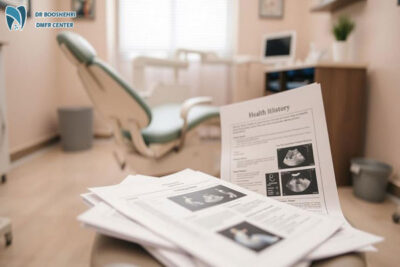
Dental Radiography During Pregnancy may be concerning for many mothers.
Everything About Dental X-rays During Pregnancy: Essential Safety Tips
Dental radiography during pregnancy can be a concern for many mothers, but by following certain safety measures, the process is generally safe. One of the most important precautions is that the dentist should be informed about the patient’s pregnancy status. This allows the dentist to take appropriate protective measures to minimize any potential radiation risks.
When dental X-rays are required, using a lead apron is one of the most important protective measures. Additionally, dentists often use digital radiography techniques, which expose patients to lower levels of radiation. These methods not only provide accurate images but also offer better protection for the fetus.
It is also important for mothers to know that dental X-rays are generally safer during the second trimester of pregnancy. At this stage, the fetus is less sensitive to external radiation. However, it’s always advisable to consult with your doctor before undergoing any radiography during pregnancy.
Is Dental Radiography Dangerous for the Fetus?
One of the main concerns for pregnant mothers is whether dental radiography poses any risk to the fetus. In fact, the amount of radiation exposure from dental X-rays is very low and does not present a significant risk to the fetus. The use of lead shields and advanced technology further minimizes radiation exposure to the fetus.
However, to reduce any potential risk, it is recommended that dental X-rays during pregnancy be performed only when absolutely necessary. If a dental issue is not urgent, the dentist may suggest postponing the X-ray until after pregnancy. But when an accurate diagnosis is required, dental radiography can help identify and treat dental problems more quickly.
Overall, dental X-rays during pregnancy are considered safe, but the decision to proceed should always take into account the specific situation of the patient and be made in consultation with a physician.
When Can Dental Radiography Be Performed During Pregnancy?
Although dental radiography is generally safe during pregnancy, the timing of the procedure can affect potential risks. During the first trimester, the fetus is developing and is more sensitive to radiation. For this reason, many doctors recommend delaying non-urgent X-rays until after the first trimester.
The second trimester is considered a safer period for dental radiography. At this stage, the fetus is less affected by external radiation, and dental X-rays are usually recommended during this time. However, if an urgent dental issue arises, radiography can be performed with safety precautions at any stage of pregnancy.
In the third trimester, radiography is similarly low-risk as in the second trimester. However, due to the increased size and weight of the fetus, the mother may experience discomfort. Therefore, it’s important to consult with both a doctor and dentist before making a final decision.
Protective Measures for Mother and Fetus During Dental X-rays in Pregnancy
Dental X-rays during pregnancy are accompanied by protective techniques to ensure the safety of both mother and fetus. One of the most common methods is the use of a lead apron, which is placed directly over the mother’s abdomen. This apron significantly reduces the amount of radiation exposure to the fetus, playing a crucial role in protection.
Newer radiography technologies have also reduced radiation doses. Digital radiography, which is now widely used, provides high precision and requires less radiation. This technology allows dentists to capture high-quality images of the teeth while minimizing the amount of radiation absorbed by the mother’s body.
Lastly, consulting with both a physician and dentist regarding the necessity of radiography and the use of appropriate protective equipment can alleviate the mother’s concerns and provide her with greater peace of mind.
When Is Dental Radiography Necessary During Pregnancy?
Dental X-rays during pregnancy are only performed when absolutely necessary. If a pregnant woman experiences severe dental problems, such as infections, abscesses, or intense pain that requires immediate diagnosis, the dentist may recommend dental X-rays. Failing to diagnose and treat these issues promptly could pose risks to both the mother and the fetus.
Some dental issues may not be detectable without X-rays, and delaying treatment could worsen the condition. In such cases, the dentist will use protective techniques like lead aprons and digital equipment to conduct the X-ray with minimal risk, providing the necessary information for diagnosis and treatment.
In the end, while it is best to avoid dental X-rays during pregnancy when possible, in emergency situations, this procedure can help preserve the health of both the mother and fetus.
Effects of Dental X-rays in Different Trimesters: When Is It Safer?
Dental X-rays during pregnancy may be more or less risky depending on the stage of pregnancy. In the first trimester, when the fetus is developing vital organs and tissues, the risk from radiation exposure is higher. Although the radiation level from dental X-rays is very low, dentists often prefer to avoid conducting X-rays during this period.
The second trimester is considered a safer time for dental X-rays. During this period, the fetus continues to grow, but its sensitivity to external radiation decreases. Therefore, if dental X-rays are necessary, this is generally a more suitable time.
The third trimester is similar in safety to the second trimester. However, due to the increased size of the mother’s abdomen, performing some diagnostic procedures may be more challenging. In any case, the physician and dentist should collaborate to determine the best time for dental X-rays during pregnancy.
Advantages and Disadvantages of Dental X-rays During Pregnancy
Dental X-rays during pregnancy have both advantages and disadvantages. One of the key benefits is the ability to quickly and accurately diagnose dental problems. Many issues, such as infections and abscesses, cannot be properly diagnosed without X-rays, and delaying treatment could worsen the condition.
On the downside, one of the main concerns is radiation exposure to the mother and fetus. Although the radiation dose from dental X-rays is very low, there are still concerns about its potential effects on fetal development. Therefore, this procedure is recommended only when necessary and should be done with appropriate protective measures.
Ultimately, the decision to undergo dental X-rays during pregnancy should be based on the specific circumstances of each patient and the necessity of accurate diagnosis and treatment.
Can Other Methods Be Used Instead of Dental X-rays During Pregnancy?
During pregnancy, some mothers may prefer to avoid dental X-rays to prevent radiation exposure to the fetus. While alternative non-imaging methods, such as manual and clinical examinations, can sometimes be used to diagnose dental issues, these methods may not provide enough information in many cases.
When dental X-rays are essential, other imaging techniques might be considered, but most dentists choose digital radiography as the first option due to its high accuracy and low radiation dose.
Conclusion
In conclusion, if dental X-rays during pregnancy are performed correctly and with safety precautions, they pose no risk to the mother or fetus. Given the importance of dental health during pregnancy and the need for accurate diagnosis of oral problems, using advanced technologies such as controlled radiation dental X-rays can be extremely helpful.
If you’re looking for a center with the necessary expertise and experience, Dr. Boushehri, an oral, maxillofacial, and dental radiology specialist, is an excellent choice. His specialized imaging center, equipped with state-of-the-art devices, offers precise and safe imaging for pregnant mothers. With years of experience in this field, Dr. Boushehri can guide you toward accurate diagnosis and treatment.
To book a consultation and specialized imaging, you can visit Dr. Boushehri’s center. If you have any specific concerns or questions about dental X-rays during pregnancy, feel free to leave a comment, and you’ll receive a thorough response to put your mind at ease.