Diagnosis of gum diseases by bitewing radiography is the topic you will learn about in this article. This imaging technique helps dentists identify and treat gum diseases in their early stages. If you care about the health of your gums and want to know how this method can be used for the prevention and treatment of gum diseases, this article provides all the essential information you need. Additionally, this article will answer questions that are important for a better understanding of this crucial technique.
The questions that will be answered in the following sections include:
- Can bitewing radiography accurately diagnose gum diseases?
- Is bitewing radiography painful for diagnosing gum diseases?
- Is bitewing radiography applicable for children as well?
- How often should bitewing radiography be performed to check for gum diseases?
- Can bitewing radiography identify all gum problems?
We recommend that you read the entire article to find answers to all these questions and gain complete information about the evaluation of gum diseases using bitewing radiography.
How Bitewing Radiography Makes Diagnosis of Gum Diseases Easier
Bitewing radiography is a powerful tool in dentistry that allows dentists to examine gum diseases and hidden problems in the mouth. This technique, aided by precise two-dimensional images of the teeth and surrounding tissues, including the gums, enables specialists to identify diseases that are not detectable with the naked eye. Gum diseases, which are often asymptomatic in their early stages, can progress silently and lead to more serious issues.
Bitewing radiography is one of the best tools for the early detection of gum diseases due to its high capability for imaging between teeth and the supporting bones. This method helps dentists recognize early signs of diseases such as bone resorption and gum inflammation. The sooner these issues are identified, the quicker and more effective their treatment will be.
In many cases, individuals are unaware of their gum diseases because these conditions often manifest without pain or clear symptoms. However, bitewing radiography allows dentists to detect even the smallest changes in the structures of the bones and gums, thereby preventing disease progression. This approach increases the chances of successful treatment and can prevent more severe issues, such as tooth loss.
The Role of Bitewing Radiography in the Diagnosis of Gum Diseases and New Advances
Studies have shown that bitewing radiography, due to its high accuracy and ability to display precise details—especially in the posterior areas of the teeth—is a key tool for diagnosing periodontal diseases and bone resorption. This method, due to its simplicity and lower radiation dose compared to other methods such as panoramic radiography, not only provides high accuracy but also reduces imaging time and costs. For this reason, bitewing radiography is commonly used in epidemiological studies to extensively assess gum diseases.
However, in some more complex cases, bitewing radiography may not accurately show subtle bone changes. In such circumstances, the use of advanced technologies like cone beam computed tomography (CBCT) is recommended, as they can capture more detailed images of bone structure and surrounding tissues. Recent studies have also indicated that combining bitewing radiography with artificial intelligence in radiographic software can significantly enhance diagnostic accuracy. Therefore, while bitewing radiography is a highly effective tool for diagnosing gum diseases, complementary technologies can be utilized in more complex cases.
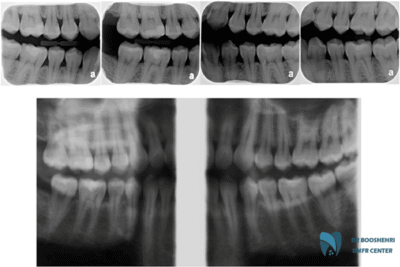
Use bitewing radiography for the Diagnosis of gum diseases and take advantage of its 3 key benefits for the Evaluation of gum diseases.
Early Diagnosis of Gum Diseases: The Key Role of Bitewing Radiography
Early diagnosis of gum diseases is crucial for maintaining oral and dental health. One effective method for this is the use of bitewing radiography. This technique provides detailed images of the spaces between teeth and gums, helping dentists identify early signs of gum diseases, such as inflammation and bone resorption. Given that these diseases have few clinical signs in their early stages, early diagnosis can prevent more serious issues from arising.
In addition to evaluating gum diseases, bitewing radiography allows dentists to assess the health of the supporting bones of the teeth. These images display minor changes that are not visible to the naked eye. If gum disease is diagnosed in a timely manner, preventive treatments such as scaling and improving oral hygiene can halt the progression of the disease, thereby keeping the teeth and gums healthy.
The key role of bitewing radiography in the evaluation of gum diseases is not limited to early diagnosis; it also aids dentists in assessing the progress of treatment. These images serve as a benchmark for evaluating the effectiveness of various treatments, allowing dentists to accurately assess treatment outcomes and, if necessary, take further actions to improve results.
Can Bitewing Radiography Detect Gum Diseases Before It’s Too Late?
One of the main challenges in treating gum diseases is their early diagnosis before they progress to dangerous stages. Many individuals are unaware of the condition of their gums due to the lack of significant clinical symptoms, and by the time the disease reaches advanced stages, treatment becomes more difficult and complex. Bitewing radiography serves as an effective tool for diagnosing gum diseases, enabling dentists to identify issues before it’s too late and initiate appropriate treatments.
This technique can detect gum diseases in their early stages due to its ability to provide precise imaging of internal oral structures, including areas that are not easily visible. If gum disease is identified in a timely manner, dentists can implement simple treatment measures, such as deep cleaning and improving oral hygiene, to prevent the progression of the disease and the need for more invasive treatments.
Using bitewing radiography, dentists can identify bone resorption and damage to the supportive tissues of the teeth at early stages and take prompt action. This method can prevent irreversible consequences, such as tooth loss and the need for complex surgeries, thus playing a vital role in the long-term health of gums and teeth.
The Power of Bitewing Radiography in Identifying Silent Gum Diseases
Silent gum diseases refer to conditions that progress without clear and visible symptoms and may only show signs when they require advanced treatment. Bitewing radiography helps dentists identify these silent diseases in their early stages. By closely examining bitewing images, small changes in the gums and supporting bone structures can be detected, which are often not visible to the naked eye.
This method is particularly effective for diagnosing conditions like periodontitis, which can lead to bone resorption and tooth loss. With the aid of bitewing radiography, dentists can quickly take necessary therapeutic actions to prevent disease progression. This early diagnosis can help preserve teeth and maintain gum health, reducing the need for more complex and costly treatments.
Given that many gum diseases do not show clear symptoms in their early stages, the role of bitewing radiography in evaluating these conditions is crucial. This technique helps dentists identify subtle changes that indicate the onset of gum diseases and allows for prompt intervention to prevent more serious problems in the future.
Frequently Asked Questions from Visitors to the Specialized Imaging Center
Can Bitewing Radiography Accurately Diagnose Gum Diseases?
Bitewing radiography is one of the key tools in dentistry for diagnosing gum diseases. This technique allows dentists to obtain precise images of the spaces between teeth and their supporting bones. Using these images, dentists can identify early signs of gum diseases, including bone resorption and gum inflammation. The accuracy of this method is very high, enabling the detection of even minor changes in the bone and gum structure, which is crucial for early diagnosis and prevention of disease progression.
Is Bitewing Radiography Painful for Diagnosing Gum Diseases?
Bitewing radiography is a non-invasive and painless method for imaging the mouth and teeth. This method involves placing a small plate or sensor in the patient’s mouth, which may cause slight discomfort, but is not painful. The images are taken quickly, and there is no need for cuts or the use of invasive tools. Therefore, individuals needing a gum disease evaluation can safely use this method and benefit from accurate and timely diagnoses.
Is Bitewing Radiography Applicable for Children as Well?
Yes, bitewing radiography is suitable for children and is an effective method for diagnosing dental and gum issues in them. This method, due to its high accuracy and the clear images it provides of teeth and gums, can help dentists assess the gum and dental status of children. The use of bitewing radiography in children is particularly beneficial for the early detection of gum problems and examining interproximal caries. This method is completely safe and is performed with minimal radiation exposure.
How Often Should Bitewing Radiography be Performed to Monitor Gum Diseases?
The timing for performing bitewing radiography varies for each patient and depends on their oral health status. Generally, dentists may recommend that individuals at high risk for gum diseases or with a history of gum issues undergo this type of radiography every 6 months to 1 year. However, for individuals with healthy gums and no significant dental issues, this method may only be necessary every 2 to 3 years. These periodic evaluations can help identify gum issues early and prevent their progression.
Can Bitewing Radiography Identify All Gum Problems?
Bitewing radiography is a highly effective tool for identifying many gum and dental problems, particularly bone resorption and sub-surface inflammations that are not visible to the naked eye. However, it is important to note that this method alone cannot identify all issues related to the gums. For example, bitewing radiography cannot accurately show soft tissue changes in the gums or superficial infections. Therefore, to comprehensively assess the condition of the gums, dentists may use clinical examinations and other imaging methods, such as CBCT or three-dimensional imaging, in addition to this technique.
Conclusion
By the end of this article, you now understand how effective bitewing radiography is in the early diagnosis of gum diseases and how it can help maintain your oral health. If you feel you need a more thorough evaluation or are looking for a skilled specialist in oral and jaw imaging, Dr. Boushehri could be the best choice. Dr. Boushehri, a specialist in oral and maxillofacial radiology, has extensive experience in this field and can assist you in accurately diagnosing and treating dental and gum issues.
Through his specialized imaging center, you can schedule an appointment for a comprehensive evaluation of your gums and teeth. Also, if you have any questions in this regard, feel free to post them in the comments section so they can be addressed.