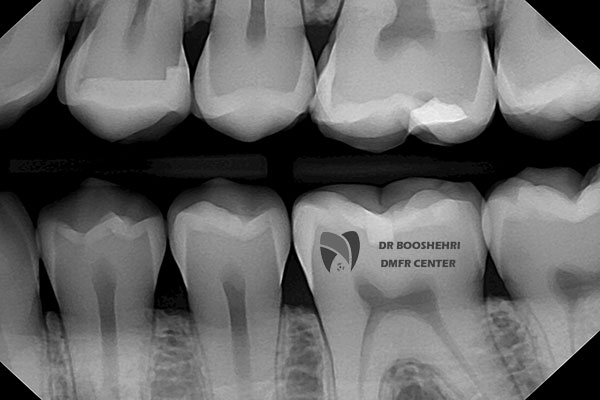
Bitewing radiography is a topic that we will explore in this article as one of the essential tools for diagnosing dental caries. Bitewing radiography allows dentists to accurately assess the condition of teeth and the surrounding areas. In this context, we will answer three fundamental questions: What are the limitations of bitewing radiography in diagnosing caries? What is bitewing radiography, and what is its application? And why is bitewing radiography important for diagnosing dental caries? As we continue, we will delve into this topic and provide detailed explanations to enhance understanding of the significance of this type of radiography.
What are the limitations of bitewing radiography in diagnosing dental caries?
Despite its high accuracy, bitewing radiography has limitations in diagnosing dental caries. One of the primary challenges is the occurrence of false-negative diagnoses, especially in the early stages of enamel caries. This means that radiography may not be able to detect small caries in their initial stages, which can lead to delays in treatment and the progression of decay. Therefore, in some cases, the use of auxiliary diagnostic tools, such as infrared technology, is recommended to enhance sensitivity in detecting these types of caries. In fact, these technologies can assist dentists in providing more accurate images of the condition of the teeth, resulting in better diagnoses.
Other studies indicate that while bitewing radiography has high accuracy, false-negative diagnoses may occur, particularly in the early stages of enamel caries, highlighting the need for auxiliary diagnostic tools such as infrared technology to enhance sensitivity.
On the other hand, recent innovations in radiography, particularly the use of X-ray positioning devices and extraoral bitewing radiography, have improved image quality and patient comfort. This is especially important for children, who may face challenges related to positioning. Overall, despite its limitations, bitewing radiography remains a vital tool for diagnosing and treating dental issues, and with ongoing improvements, its diagnostic potential will continue to increase.
In a separate article, we have examined wisdom tooth radiography and discussed this topic in detail. You can read this article.
What is Bitewing Radiography and What Are Its Applications?
Bitewing radiography is a type of dental imaging used to examine and diagnose dental problems. This type of radiography typically involves placing a film or digital sensor in the patient’s mouth to capture an image of the teeth and surrounding areas. Bitewing radiography specifically helps in assessing posterior teeth (molars) and interproximal areas, and it is commonly used in preventive and restorative dentistry.
Applications of bitewing radiography include the diagnosis of interproximal caries, evaluation of restored teeth, assessment of periodontal diseases, and evaluation of jawbone conditions. For example, this type of radiography can be very effective in identifying hidden caries that may not be visible to the naked eye. Additionally, with the help of bitewing radiography, dentists can detect changes in the structure of the teeth and gums, which can lead to timely and effective treatments.
Furthermore, bitewing radiography can assist dentists in planning more complex treatments. For instance, if a dentist decides to extract a tooth or perform a restoration, bitewing radiography can aid in determining the best treatment approach. Therefore, it can be said that bitewing radiography is an efficient and essential tool in dentistry.
Why is Bitewing Radiography Important for Diagnosing Dental Caries?
Bitewing radiography is important for diagnosing dental caries for several reasons. First, this type of radiography allows for a precise view of the internal structures of the teeth and interproximal areas. In other words, if caries occur in the internal layers of the teeth or in areas not visible to the naked eye, bitewing radiography can help dentists identify these issues. Particularly in the early stages of decay, this imaging method can be very effective due to its high accuracy in detecting problems.
Second, bitewing radiography enables dentists to examine the condition of restored teeth as well. For example, if a dentist has previously filled a tooth, radiography can assist in evaluating the integrity of the filling and the likelihood of decay around it. This can facilitate timely treatments and help prevent more serious complications. Additionally, based on the information obtained from bitewing radiography, dentists can design appropriate treatment plans for patients and prevent the progression of dental issues.
Conclusion
Ultimately, bitewing radiography is a vital tool in the diagnosis and treatment of dental caries. Despite its limitations, it can aid in the accurate identification of dental problems and allows dentists to make better decisions regarding the treatment of their patients. If you require specialized services and consultation, you can visit “Dr. Boshiri’s” radiography center. He specializes in maxillofacial radiology, and you can easily book your appointment through our website.