CBCT imaging (Cone Beam Computed Tomography) is one of the most advanced imaging techniques that has revolutionized the fields of dentistry and maxillofacial care. This article explores the key differences between CBCT and traditional imaging methods, offering comprehensive insights into their applications, advantages, and limitations. Readers will gain valuable information on safety, costs, and the appropriate use cases for each method.
We invite you to read this article to make informed decisions about the best imaging option for your needs and to find answers to essential questions.
Questions Addressed in This Article:
- How does CBCT imaging differ from panoramic imaging?
- Is CBCT imaging safer than traditional imaging methods?
- Who is CBCT imaging most suitable for?
- Why is CBCT imaging more expensive than traditional imaging?
- Can CBCT imaging replace traditional imaging techniques?
Continue reading to discover the answers to these questions and better understand this topic.
CBCT (Cone Beam Computed Tomography) provides higher precision and complete 3D information compared to traditional imaging methods. This is particularly essential in fields like implantology, the diagnosis of bone lesions, and adaptive radiotherapy. Studies show that CBCT allows for high-resolution 3D imaging of anatomical structures, reducing surgical risks. Moreover, it excels in identifying bone abnormalities and enabling precise treatment planning, whereas traditional methods often lack the capability to provide detailed 3D information and suffer from lower accuracy.
Introduction to CBCT and Traditional Imaging: Where Do the Differences Begin?
CBCT imaging is a cutting-edge technique in dentistry and maxillofacial care that uses 3D technology to deliver high-resolution, highly accurate images. In contrast, traditional imaging encompasses methods such as 2D radiography and panoramic imaging, which remain widely used.
CBCT imaging offers unparalleled details of intricate structures such as fine bone anatomy, nerve pathways, and the precise positioning of teeth. It is particularly useful for procedures like implants, orthodontics, maxillofacial surgeries, and the diagnosis of complex conditions. Traditional imaging, while more cost-effective and accessible, has limitations in providing precise 3D data.
In today’s world, the need for more accurate diagnostics and reduced errors has driven many specialists toward CBCT imaging. However, traditional methods still maintain their position in specific scenarios due to their lower costs and general utility. This article aims to highlight the most critical differences between the two approaches, helping practitioners and patients make informed choices.
CBCT Imaging: Benefits and Key Applications in Dentistry and Maxillofacial Care
Thanks to its high accuracy and ability to provide 3D images, CBCT imaging has become indispensable in many diagnostic and therapeutic situations. One of its significant advantages is the ability to view complex maxillofacial structures from multiple angles. For example, during dental implant planning, CBCT imaging enables precise assessment of implant positioning, bone density, and nerve pathways.
CBCT is also highly beneficial in orthodontic treatments. Using 3D imaging, orthodontists can evaluate the exact alignment of teeth and jaws and devise optimized treatment plans. Furthermore, CBCT is effective in diagnosing cysts, tumors, and sinus issues.
A unique feature of CBCT imaging is its lower radiation exposure compared to conventional CT scans, making it a safer option for patients. However, its higher costs and reliance on advanced equipment pose challenges for widespread use.
Traditional Imaging: Its Role and Limitations in Dentistry
Traditional imaging remains a staple in many dental clinics and treatment centers, including methods like periapical radiographs, bitewings, and panoramic imaging. Panoramic radiography is among the most common traditional techniques, offering a comprehensive view of teeth, jaws, and temporomandibular joints.
The primary advantage of traditional imaging is its lower cost and greater accessibility. For general evaluations, such as detecting cavities, fractures, and minor infections, these methods are still practical options. However, their main limitation is their inability to provide detailed 3D images, which are often critical for more complex procedures.
For situations such as dental implants or diagnosing advanced conditions, traditional methods fall short in delivering sufficient detail. This has led to the growing preference for advanced technologies like CBCT imaging.
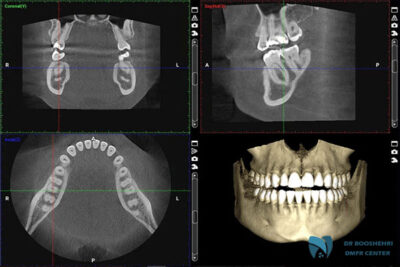
Discover the differences between CBCT imaging and traditional methods. Learn about advantages, applications, and safety of CBCT imaging.
Comparing Image Quality: CBCT vs. Traditional Imaging
A fundamental distinction between CBCT and traditional imaging lies in image quality. CBCT provides high-resolution 3D images, enabling the detailed examination of dental and bony structures. These images facilitate a more accurate analysis of patient conditions.
Conversely, 2D images obtained from traditional methods often lack depth and detail. For example, in panoramic radiography, certain structures may not be clearly visible due to overlapping or interference. The difference in image quality plays a crucial role in determining the appropriate method for various clinical needs.
The Impact of CBCT Imaging on Reducing Diagnostic Errors Compared to Traditional Imaging
One of the primary reasons for using CBCT imaging in dentistry and maxillofacial fields is its significant ability to reduce diagnostic errors. The three-dimensional images provided by CBCT enable clinicians to examine the precise location of structures, hidden issues, and the condition of surrounding tissues.
In contrast, traditional imaging, due to its limitations in presenting three-dimensional information, can lead to diagnostic errors. For instance, in identifying complex fractures or bone resorption, CBCT provides more comprehensive information due to its higher accuracy.
CBCT or Traditional Imaging: Which Method Is Right for You?
The choice between CBCT and traditional imaging depends on the type of treatment and the patient’s needs. If detailed evaluation of complex structures, implant planning, or diagnosis of serious conditions is required, CBCT imaging is the better option. However, for simpler and more general cases, traditional imaging may suffice.
Ultimately, consulting with a specialist and considering the patient’s condition can help determine the appropriate method. The choice should be based on the required accuracy, cost, and clinical circumstances.
Frequently Asked Questions About CBCT and Traditional Imaging
1. What is the difference between CBCT imaging and panoramic imaging?
Panoramic imaging is a traditional method that provides a two-dimensional view of the entire jaw, teeth, and jaw joints. However, CBCT imaging generates highly accurate three-dimensional images, enabling clinicians to observe more details of bone and tissue structures. For example, in panoramic imaging, the exact location of nerve canals is not clearly defined, whereas CBCT can display these structures with precision.
2. Is CBCT imaging safer than traditional imaging?
CBCT imaging generally involves a lower radiation dose compared to older methods such as CT scans, but it typically uses more radiation than traditional imaging techniques like panoramic or periapical imaging. Nevertheless, its diagnostic advantages, such as higher accuracy and reduced errors, justify this radiation exposure. Clinicians usually reserve CBCT imaging for cases where it is essential, minimizing unnecessary radiation exposure to patients.
3. Who is CBCT imaging most suitable for?
This method is best suited for patients requiring a more detailed evaluation of jaw and dental structures. Patients preparing for dental implants, undergoing orthodontic treatment, or dealing with complex issues like cysts, tumors, or jaw fractures benefit most from CBCT imaging. On the other hand, traditional imaging is adequate for simpler cases, such as diagnosing cavities or superficial fractures.
4. Why is CBCT imaging more expensive than traditional imaging?
The higher cost of CBCT imaging is due to the advanced equipment and complex technology used to produce three-dimensional images. Additionally, CBCT devices require more maintenance, which also contributes to the overall cost. However, the precision and additional information provided by CBCT have made it a popular choice among patients and clinicians alike.
5. Can CBCT imaging replace traditional imaging?
In certain cases, CBCT imaging can replace traditional methods, particularly when high accuracy and three-dimensional information are necessary. However, traditional imaging remains widely used for more general purposes due to its lower cost and accessibility. For instance, in cases like diagnosing cavities or superficial infections, the high level of detail provided by CBCT may not be required, making traditional methods more suitable.
In this article, the key differences between CBCT imaging and traditional imaging were discussed. As mentioned, CBCT imaging offers numerous advantages, including higher accuracy, three-dimensional images, and extensive applications in complex diagnoses. However, traditional methods remain highly useful for simpler cases. Given the importance of choosing the appropriate imaging method, consulting with specialists in the field is essential.
Dr. Boushehri, a prominent specialist in oral and maxillofacial radiology, provides the best imaging services by utilizing advanced knowledge and equipment. His specialized center is equipped with modern CBCT devices, enabling more accurate diagnoses and better treatment options. If you need a consultation or specialized imaging, you can schedule an appointment through his center.
Additionally, if you have any questions, feel free to ask them in the comments section of this page, and they will be answered. Take action now and benefit from Dr. Boushehri’s expertise!