Intraoral radiography is one of the most important dental imaging techniques, playing a crucial role in the detailed examination of teeth and jaw structures. Using this method, dentists can identify hidden oral and dental issues and provide the best possible treatment. Dental diagnosis becomes more precise and faster with this technology, reducing the chances of errors.
In this article, you will learn about the applications of intraoral radiography in dental treatments. We will also answer essential questions that are crucial for maintaining your oral health. If you are looking for comprehensive information on dental imaging, stay with us until the end of this article.
Questions Answered in This Article:
- What is intraoral radiography, and what are its applications?
- What is the difference between intraoral radiography and panoramic radiography?
- Is intraoral radiography harmful to patients?
- How many types of intraoral radiography exist, and what are their uses?
- Can a dental CT scan replace intraoral radiography?
To get answers to these questions, be sure to read this article to the end!
Intraoral Radiography: A Key Role in Dental Imaging
Intraoral radiography is one of the most essential dental imaging methods that help dentists thoroughly examine oral and dental issues. This imaging technique allows for a detailed view of teeth, jawbones, and even the gums. Dental diagnosis using intraoral radiography has become more precise, improving treatment outcomes.
This method is not only used for dental diagnosis but also for evaluating completed treatments. With dental imaging, dentists can detect cavities, root infections, and other dental problems before they worsen.
Types of Intraoral Radiography and Their Applications in Dental Diagnosis
Intraoral radiography is categorized into different types, each serving a specific function in dental imaging. One of the most common types is bitewing radiography, used to detect cavities between teeth. Another type is periapical radiography, which provides detailed images of tooth roots and is essential for dental diagnosis of root infections and cysts.
Additionally, occlusal radiography is another dental imaging technique that provides a broad view of the upper and lower jaw. This method helps dentists assess tooth development, detect tumors, and identify other oral abnormalities.
Advantages of Intraoral Radiography in Dental Treatments
Intraoral radiography is one of the most precise dental imaging techniques that help dentists provide better treatments. One of the key advantages of this method is the reduction of errors in dental diagnosis. High-resolution images allow dentists to detect issues such as hidden cavities, fractures, and root problems.
Moreover, compared to other dental imaging techniques, intraoral radiography exposes patients to lower radiation levels, making it a safer option. It is also widely used in orthodontic treatments, dental surgeries, and implant assessments.
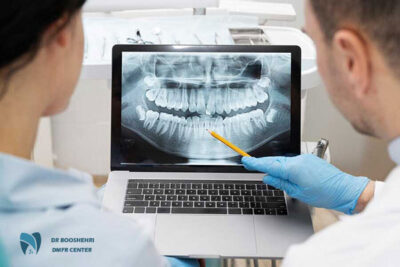
Intraoral radiography is a precise dental imaging tool for dental diagnosis, detecting decay, infections, and aiding in jaw and dental treatments.
How Does Dental Imaging Help in More Accurate Dental Diagnosis?
Dental imaging is one of the most crucial tools in dental diagnosis. Without the use of intraoral radiography, many oral and dental issues might go undetected. This technique enables dentists to diagnose periodontal diseases, root infections, and even jaw abnormalities with greater accuracy.
Dental imaging allows dentists to compare the condition of teeth before and after treatment and assess the effectiveness of the procedure. Additionally, intraoral radiography helps detect early-stage cavities and hidden dental issues that are not visible during a visual examination.
Advanced Applications of Intraoral Radiography in Root Canal Treatment and Dental Restoration
As one of the most advanced dental imaging techniques, intraoral radiography plays a crucial role in complex treatments such as root canal therapy and dental restorations. During root canal treatments, dentists use intraoral radiography to examine the root canals and confirm the success of the procedure. This technique is highly effective in dental diagnosis of root fractures and internal infections.
In dental restorations, intraoral radiography helps evaluate the quality of fillings, crowns, and other restorative treatments. This ensures greater treatment accuracy and reduces the need for additional procedures.
Comparison of Different Dental Imaging Methods and the Role of Intraoral Radiography
Dental imaging includes various techniques, each with its unique advantages and applications. Among these methods, intraoral radiography holds a special place due to its high precision and widespread usage. Compared to panoramic radiography, which provides an overall view of the jaw and teeth, intraoral radiography offers highly detailed images of specific areas of the mouth, making it highly valuable for dental diagnosis.
Additionally, compared to dental CT scans, which are used for 3D structural assessments, intraoral radiography is a more cost-effective option with lower radiation exposure, making it ideal for routine treatments. This method remains one of the most widely used dental imaging techniques and is essential in a variety of dental procedures.
Frequently Asked Questions About Intraoral Radiography
1. What is intraoral radiography, and what is it used for?
Intraoral radiography is one of the most important dental imaging techniques used for a detailed examination of teeth, jawbones, and oral tissues. This method helps dentists detect issues such as hidden cavities, root infections, dental fractures, and even gum diseases. Dental diagnosis using this technique is highly accurate and can help prevent more serious complications.
2. What is the difference between intraoral radiography and panoramic radiography?
Intraoral radiography provides highly detailed images of one or a few specific teeth, whereas panoramic dental imaging offers a comprehensive view of the upper and lower jaw. Intraoral radiography is more suitable for detecting cavities, root infections, and specialized treatments like root canals, while panoramic dental imaging is mainly used for general dental assessments, orthodontic evaluations, and checking the growth of impacted teeth.
3. Is intraoral radiography harmful to patients?
No, intraoral radiography emits a very low level of radiation, making it safe for patients. Advanced dental imaging technologies minimize radiation exposure, and protective equipment like lead aprons is used to further reduce any potential risk. Therefore, this technique is a safe and essential tool for dental diagnosis.
4. How many types of intraoral radiography are there, and what are their applications?
Intraoral radiography consists of several types, each serving a specific purpose in dental imaging:
- Bitewing Radiography – Used for detecting cavities between teeth.
- Periapical Radiography – Helps examine root problems and dental infections.
- Occlusal Radiography – Provides a broad view of the upper and lower jaw, useful for evaluating tooth development and bone abnormalities.
Each type of intraoral radiography contributes to a more precise and efficient dental diagnosis.
5. Can dental CT scans replace intraoral radiography?
Dental CT scans are used for more complex cases such as implants, jaw surgeries, and severe conditions, whereas intraoral radiography is primarily used for routine dental imaging. While dental CT scans offer greater accuracy, they are more expensive and involve higher radiation exposure. The choice between these methods depends on the patient’s needs and the dentist’s recommendation.
A Reliable Choice for Accurate Dental Imaging
If you require intraoral radiography or other dental imaging techniques, we highly recommend the services of Dr. Boushehri, a specialist in dental diagnosis and facial and jaw imaging. With extensive expertise and advanced technology, Dr. Boushehri provides the most accurate images for identifying and diagnosing dental issues.
Dr. Boushehri’s specialized dental imaging center is equipped with state-of-the-art facilities. You can book a consultation or schedule an appointment by contacting the center. Additionally, if you have any questions about dental imaging, feel free to leave a comment, and we will provide the necessary guidance.