Dental imaging for children is a topic that parents should pay special attention to. In this article, you will learn practical tips for achieving precise imaging for children. Additionally, we will address common questions from users on this topic—questions whose answers are crucial for maintaining your child’s oral health.
Questions such as:
- Why is dental imaging for children important?
- How can you prepare a child for imaging?
- Is X-ray radiation dangerous for children?
- When should dental imaging for children be done?
- What are the differences between child and adult dental imaging?
Why Is Dental Imaging for Children Particularly Important?
Dental imaging for children is one of the most essential aspects of pediatric oral health care. This process helps dentists and specialists identify issues such as cavities, growth abnormalities, and root-related problems in their early stages. The significance lies in preventing more severe complications that could endanger a child’s future oral health.
One of the primary reasons for conducting dental imaging is to detect hidden anomalies that may not be visible through a simple examination. This method also helps doctors predict the growth of permanent teeth and prevent potential issues. Using precise imaging for children during these stages enables early diagnosis and proper treatment planning.
Additionally, pediatric dental radiology leverages modern technology to minimize radiation exposure and ensure greater safety for children. Parents often worry about the radiation used in imaging, but today’s advanced equipment has significantly reduced such concerns.
Understanding the importance of dental imaging for children and choosing well-equipped, reliable centers for the procedure is a critical step in preserving children’s oral health.
Principles of Accurate Dental Imaging for Children
To achieve precise imaging for children, adhering to several essential principles is crucial. These principles involve using appropriate equipment, correct techniques, and preparing the child for the procedure. One of the first considerations is selecting advanced devices specifically designed for dental imaging for children.
Collaboration between the child and the medical team is vital in imaging. For precise imaging for children, doctors must create a calm environment and use strategies such as play or simple explanations to ensure children feel comfortable. This helps capture high-quality images without unnecessary movement.
Modern technology in pediatric dental radiology, such as digital systems, not only provides clearer images but also reduces radiation exposure. This aspect is particularly important in addressing parental concerns.
Another critical consideration is the precise adjustment of the device’s angle and position for each child. This ensures optimal and accurate images of the teeth and jaw structure. Following these principles can lead to better diagnoses and treatments.
The Role of Advanced Equipment in Pediatric Dental Radiology
Advanced equipment plays a pivotal role in improving the quality of dental imaging for children. Modern devices not only enhance image clarity but also offer numerous safety benefits. For instance, using digital systems in pediatric dental radiology significantly reduces radiation levels.
These devices often come with automatic adjustment features, allowing the radiation dosage to be tailored based on the child’s age and size. This is particularly important for precise imaging for children, as children are more sensitive to radiation.
Moreover, advanced devices enable specialists to obtain three-dimensional, detailed images of a child’s dental and jaw structure. These images provide valuable insights for accurate diagnosis and effective treatment.
Specialized software for image processing is another advancement in pediatric dental radiology. These tools assist specialists in better analyzing images and creating precise treatment plans.
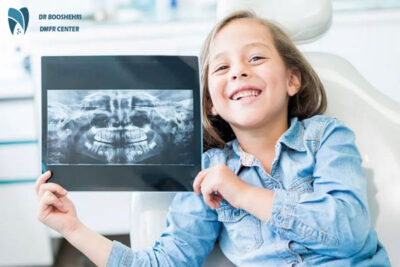
Precise dental imaging for children with safe methods, reduced risks, and advanced technology. Explore essential tips for child dental X-rays here!
Common Challenges in Children’s Dental Imaging and Their Solutions
Children’s dental imaging comes with its unique set of challenges. One common issue is a child’s lack of cooperation due to fear or stress. Children may feel intimidated by the large equipment or the sound of the machines. To overcome this, incorporating play-based methods or providing simple explanations can be helpful.
Another challenge is achieving precise imaging for children without movement. Even the slightest motion can reduce image quality. In such cases, doctors may use techniques like gently stabilizing the child or employing supportive devices to ensure optimal imaging results.
In pediatric dental radiology, correctly calibrating the equipment and minimizing radiation exposure is another concern. To address this, using digital devices and modern technologies is highly recommended. These tools not only enhance image clarity but also ensure the child’s safety.
Choosing the right time for imaging, especially when the child is calmer, can also help reduce difficulties. These points highlight that with proper planning and the application of suitable techniques, the challenges of children’s dental imaging can be minimized effectively.
Children’s Dental Imaging with Minimal Radiation Exposure
One of the primary concerns of parents regarding children’s dental imaging is the level of radiation exposure. Fortunately, advancements in pediatric dental radiology have significantly reduced the amount of radiation required.
Modern equipment with automatic radiation adjustment features ensures that only the necessary amount of radiation is used for precise imaging for children. Additionally, replacing traditional film with digital devices has reduced radiation exposure by up to 80%.
The use of lead shields is another method to minimize radiation risks during children’s dental imaging. These shields protect sensitive areas of the child’s body from unnecessary exposure.
Parents should ensure that they choose reliable and specialized radiology centers, as these facilities take all necessary precautions to reduce radiation exposure. Selecting the right center is a crucial step in ensuring the safety of children’s dental imaging.
A Guide for Parents to Prepare Children for Accurate Dental Imaging
Preparing a child for accurate imaging is a critical responsibility of parents. The first step is to familiarize the child with the imaging process. Providing a simple and age-appropriate explanation of what will happen can help reduce their anxiety.
Creating a positive experience is also essential. Parents can use stories or games to spark the child’s interest in children’s dental imaging. For example, they might explain that the imaging process is like taking a special photograph of their teeth.
Another key point is scheduling the imaging session at a suitable time. Mornings, when children are generally more relaxed and energetic, are often the best time for pediatric dental radiology.
Parents should also ensure their child wears comfortable clothing and is well-rested. These factors can help lower stress levels and improve the child’s cooperation during the procedure.
Lastly, parental presence during the precise imaging process can provide the child with reassurance and a sense of comfort, creating a positive and stress-free experience.
Frequently Asked Questions About Children’s Dental Imaging
Why is children’s dental imaging important?
Children’s dental imaging is essential for identifying hidden dental and jaw issues, such as internal cavities or developmental abnormalities. This method helps dentists detect problems early, enabling timely and appropriate treatment.
How can I prepare my child for dental imaging?
To prepare your child, explain that the imaging process is simple and painless. Using stories or games related to dental photography can help reduce your child’s stress. Scheduling the appointment at a time when the child is calmer, such as in the morning, is also effective.
Is dental X-ray radiation dangerous for children?
Modern pediatric dental radiology equipment minimizes risks through automatic radiation adjustment and the use of lead shields. The radiation level is very low, and all safety standards are strictly followed.
When should children’s dental imaging be performed?
Imaging is usually done during routine dental check-ups or when specific issues, such as cavities or growth abnormalities, are suspected. The dentist determines the appropriate timing based on the child’s condition.
How does children’s dental imaging differ from adult imaging?
Children’s dental imaging uses devices and techniques specifically designed for smaller, more sensitive mouths. Additionally, the radiation levels are lower for children to ensure their safety.
Accurate Children’s Dental Imaging Services with Dr. Boushehri
Ensuring your child’s oral health requires consulting with a skilled specialist. Dr. Boushehri, an expert in oral, jaw, and facial radiology, provides top-quality imaging services with advanced equipment and extensive expertise. His specialized center adheres to the highest safety standards, offering high-resolution images with minimal radiation exposure for children.
If you have questions about children’s dental radiology or the imaging process, feel free to ask them in the comments section. To book a consultation or schedule an appointment, contact Dr. Boushehri’s specialized center today and benefit from his professional services.