Waters sinus imaging is one of the most precise and advanced radiographic techniques used to diagnose sinus problems and their connection with teeth. In this article, you will become familiar with the applications of this method, its benefits, and how Waters radiography is performed. Additionally, questions will be answered that are essential for anyone who cares about the health of their sinuses and teeth. If you are looking for a method to accurately examine your sinuses and teeth or want to know how Waters sinus imaging can help you, stay with us until the end of this article.
Questions answered in this article:
- What is Waters sinus imaging, and what are its applications?
- When is Waters radiography necessary?
- Is Waters sinus imaging suitable for children?
- What are the steps for performing Waters radiography?
- How does Waters sinus imaging differ from other radiographic methods?
We recommend reading all sections of this article to find precise and comprehensive answers to these questions and benefit from its specialized information.
What is Waters sinus imaging, and what are its applications?
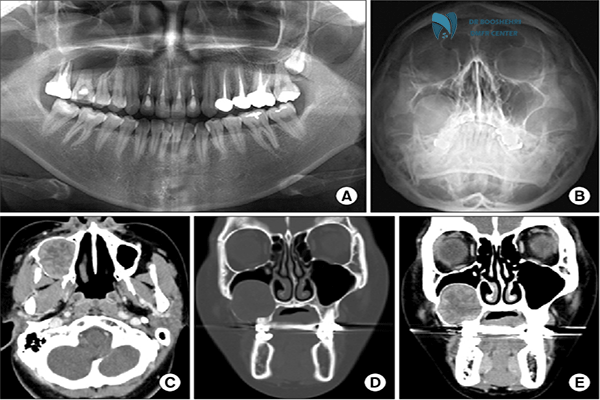
Waters sinus imaging is one of the most commonly used radiographic methods in maxillofacial radiology. This type of imaging is designed to examine sinus structures, particularly the maxillary sinuses (upper jaw). In this method, X-rays are directed at the patient’s head at a specific angle to provide a detailed image of the sinuses and teeth.
This technique helps doctors and dentists accurately examine issues such as sinus inflammation, sinus infections, facial bone fractures, and even the relationship between sinuses and tooth roots. Waters sinus imaging offers better visibility of sinus structures compared to other methods and can diagnose complex issues with greater accuracy.
Key applications of this imaging method include evaluating facial trauma, chronic sinusitis, and identifying dental infections that have spread to the sinuses. Additionally, Waters radiography is also used to determine the exact position of foreign objects in the facial area.
Overall, the high accuracy, quick procedure, and lack of special preparation make Waters sinus imaging one of its main advantages. These features have made it highly popular among maxillofacial specialists.
Newer methods, such as convolutional neural networks (CNN), have also shown similar accuracy to experienced radiologists in analyzing Waters radiography images, which can be used as a complementary tool in the diagnostic process. Furthermore, the Waters radiography view is an effective and cost-effective tool in assessing changes in sinus conditions following surgeries like maxillary sinus lifts.
Benefits of Waters Radiography in Examining Sinuses and Teeth
Waters radiography, as an advanced diagnostic tool, offers numerous benefits in examining the sinuses and teeth. This method allows for a precise examination of sinus structures and can help diagnose various problems quickly and effectively. One of the main advantages of this technique is its ability to provide a clear image of the maxillary sinuses, which are closely related to the roots of teeth.
Waters radiography is specifically designed to assess issues such as sinus inflammation, infections caused by damaged teeth, and sinus lesions. Compared to other imaging methods, this technique offers greater accuracy and can display the areas of interest without interference from other structures.
In addition to its high accuracy, the speed of Waters sinus imaging is another benefit. This technique is performed quickly, and patients do not need any special preparation, which makes it more convenient for them. Furthermore, the lower cost of this method compared to other techniques has made it an economical option for many patients.
Finally, the ability to simultaneously examine issues in both the sinuses and teeth is one of the main reasons this method is chosen by doctors and dentists.
How Does Waters Sinus Imaging Help Diagnose Diseases?
Waters sinus imaging plays a vital role in diagnosing conditions related to the sinuses and teeth. This imaging technique aids doctors in quickly identifying issues such as sinusitis, sinus cysts, and infections linked to teeth. Since the method provides a clear view of the sinuses, damaged or inflamed areas can be easily pinpointed.
In cases where dental infections have spread to the maxillary sinuses, Waters radiography can determine the exact location and extent of the infection. This allows doctors to offer targeted and effective treatments for patients.
Another significant application of this technique is assessing fractures of the upper jaw and facial bones. Waters sinus imaging enables healthcare providers to clearly observe damaged structures and choose the best treatment approach.
This imaging method is also valuable in detecting masses and lesions within the sinuses. By using this technique, any abnormal changes in the sinuses can be identified, and patients can be referred for additional diagnostic tests if necessary.

Waters sinus imaging is a precise method to analyze the connection between the sinuses and teeth. Discover sinus and dental issues effectively.
The Role of Waters Radiography in Examining Sinus and Dental Issues
Problems involving the sinuses and teeth often occur simultaneously and can influence one another. Waters radiography is an essential tool for identifying these issues and evaluating their interconnection.
Common conditions include chronic sinusitis caused by dental infections, sinus cysts, and lesions associated with teeth. Waters sinus imaging can accurately diagnose these problems and assist doctors in planning appropriate treatments.
Additionally, this technique is highly effective in identifying impacted teeth that exert pressure on the sinuses. By employing Waters radiography, doctors can determine the precise location of the impacted tooth and assess its impact on the sinuses.
This method is also useful in evaluating issues such as oral-sinus fistulas, which may develop following dental surgeries. Waters sinus imaging provides a clear visualization of these complications, aiding in their accurate diagnosis and treatment.
Steps for Waters Sinus Imaging and Key Considerations
Waters sinus imaging is a quick and painless process that does not require any special preparation. In this method, the patient is positioned in a specific posture so that X-rays can be directed at the sinuses at an appropriate angle, producing a precise image.
To perform this technique, the patient must tilt their head downward at a particular angle. This position helps the technician obtain a detailed view of the maxillary sinuses and teeth. A critical point is that the patient must remain still throughout the imaging process to avoid any errors.
This procedure typically takes less than 5 minutes, and the results are quickly made available for the doctor’s review. Due to its speed and ease, Waters radiography is suitable for patients of all ages and conditions.
Accurate Diagnosis of Sinuses and Teeth with Waters Radiography
Precision in diagnosing sinus and dental issues is essential for planning appropriate treatment. Waters radiography provides clear and accurate images, enabling precise identification of problems.
Using this technique, doctors can quickly detect conditions such as acute sinusitis, cysts, sinus lesions, and even fractures of facial bones. Thanks to its high accuracy, this method is also commonly employed in planning jaw and facial surgeries.
In summary, Waters sinus imaging is a reliable diagnostic solution for complex jaw and facial issues, enhancing treatment quality and delivering optimal outcomes for patients.
Frequently Asked Questions from Patients
- What is Waters sinus imaging, and what is it used for?
Waters sinus imaging is a specialized type of radiography designed to examine the sinuses, particularly the maxillary sinuses (upper jaw). This method helps doctors accurately diagnose issues such as sinus infections, bone fractures, or lesions related to teeth.
- When is Waters radiography needed?
Waters radiography is recommended when a doctor needs to evaluate sinus structures or their connection to teeth. It is commonly used in cases of chronic sinusitis, dental infections that have spread to the sinuses, or fractures in the facial area.
- Is Waters sinus imaging suitable for children?
Yes, Waters sinus imaging can be performed on children. This method is entirely safe and is adjusted appropriately for pediatric patients. However, a doctor will determine if this type of imaging is necessary for the child.
- What are the steps involved in Waters radiography?
In this procedure, the patient is positioned in a specific posture, and their head is adjusted at an appropriate angle to allow X-rays to create a clear image of the sinuses. The process is quick, painless, and usually takes less than 5 minutes.
- How does Waters sinus imaging differ from other radiography methods?
Waters imaging is performed at a specific angle that provides a clear view of the maxillary sinuses and structures related to teeth. Compared to other radiography techniques, it offers more detailed visualization of the sinuses, making it highly effective for accurate diagnosis of related problems.
Why Choose Dr. Boushehri for Consultation on Waters Sinus Imaging?
Specialized radiography like Waters sinus imaging requires skill, up-to-date knowledge, and advanced equipment. Dr. Boushehri, an expert in oral, jaw, and facial radiology, leverages their extensive experience and specialized expertise in this field, offering high-quality services using the most advanced imaging devices.
You can benefit from the services of Dr. Boushehri’s specialized imaging center and schedule a consultation for a thorough evaluation of your sinuses and teeth. If you have any questions, feel free to ask them in the comments section, and the professional team at Dr. Boushehri’s center will provide you with accurate answers. Take the right step for your oral and jaw health today!